
Sex Offender Checks in Charleston County
The official starting point for a Charleston County sex offender search is SLED's South Carolina Sex Offender Registry guidance. The registry, also called SORT, is statewide. It is free to search. Charleston County residents can enter through the conditions page, search a name, or use the geographic tools to examine reported locations. The sheriff's role is registration and local compliance, but the research found no verified separate Charleston County public list or map. That makes the SLED record the right public first step.
A name is useful when the person is known. A geographic search is better for an address-based safety question. Neither method should be read in isolation. Registry data can change and can depend on information reported by the registrant. Inclusion reflects a qualifying conviction and South Carolina law, not a new finding that a person poses a present threat. For a suspected error, save the profile details and contact SLED or the registering sheriff.
The official SORT entry screen shows the terms that each searcher must accept.
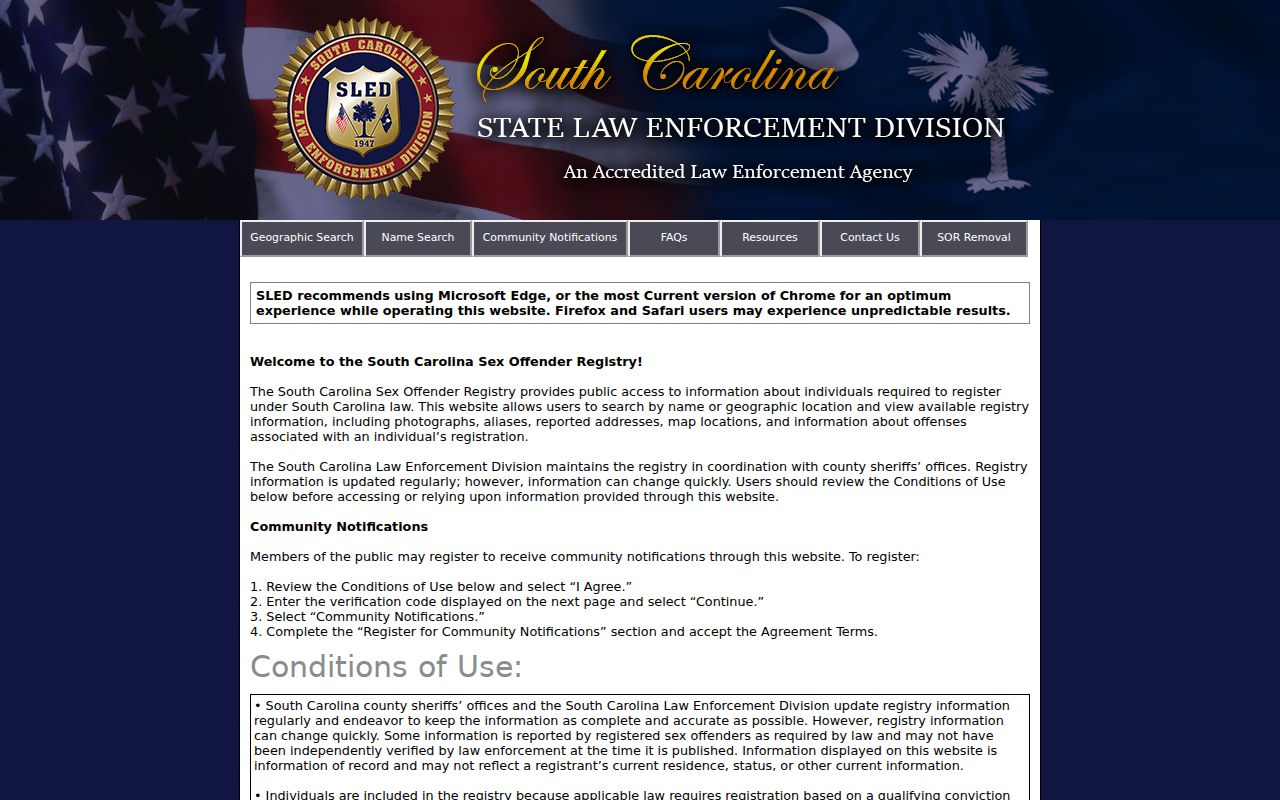
This entry gate is part of every Charleston County registry lookup and appears before any search results.
Charleston County Name or Map Search
SORT offers two distinct paths. Name Search uses first and last name. Geographic Search uses location and map tools. Choose one based on what is known, not on which produces more rows. A spelling mismatch can hide a name result, while a mapped point reflects a reported residence and may lag a move. Comparing both modes can help when the name or location is uncertain.
The navigation also includes Community Notifications, FAQs, Resources, Contact, and SOR Removal. Those are separate services. Community Notifications can track later changes after a user registers, while the removal area serves eligible registrants and is not a way for the public to erase or alter a profile. The conditions gate prevented a safe capture of every radius and dropdown option, so no unverified distance choices should be assumed.
How to Search the South Carolina Sex Offender Registry / SORT
SLED manages the South Carolina Sex Offender Registry / SORT. A Charleston County sex offender search begins at the official conditions page, not at a commercial people-search service. Have a first and last name ready for a person search. For a place-based check, use the site's own geographic mode and map rather than guessing a radius that the official interface may not offer.
- Open the SORT Conditions of Use, read the terms, enter the verification code, and select Continue.
- Choose Name Search for a known person or Geographic Search for a location and map view.
- Compare names, aliases, photographs, and the reported location before deciding that a row is the intended record.
- Open the profile and read its conviction and registration details, then confirm a disputed item with SLED or the sheriff.
| Field Label | Type | Required | Notes |
|---|---|---|---|
| First Name | Text | Name mode | Use the known spelling; confirm against aliases. |
| Last Name | Text | Name mode | Pairs with first name in the documented name search. |
| Location | Geographic input | Geographic mode | Use the official controls shown after entry. |
| Map | Interactive map | No | Shows reported points; fixed radius choices were not verified. |
Note: A zero result means only that SORT found no public match under those inputs at that time.
When Charleston County Registry Addresses Lag
A mapped address is a reported fact, not a live tracking point. Moves, verification cycles, and agency processing can create a gap between an event and the public display. That is why a Charleston County sex offender result should be dated when it is checked. A user who sees a likely error should preserve the profile and report it through official channels. Personal contact with the listed person is neither a correction process nor a safe response.
Community Notifications can reduce the need to repeat the same map search. The registry appendix notes that users of the prior notification system must re-register. Signup requires another conditions acceptance, verification, registration form, and agreement. It is an alert service, not a guarantee that every move will appear at once.
Inside a Registry Profile
A public SORT profile links identity and place information to the conviction and registration facts that South Carolina law permits SLED to show. Official descriptions support photographs over time, aliases, a reported residence and map point, qualifying sexually related offenses, and conviction or registration information. The research did not safely confirm public fields for vehicles, work or school, compliance labels, scars, tattoos, or victim age, so those details should not be presumed.
| Name and Aliases | Known identity labels used to distinguish one record from another. |
|---|---|
| Photographs | Official guidance says photographs over time can appear. |
| Reported Residence | The address supplied for registration and its mapped point. |
| Qualifying Offense | The sexually related conviction supporting the registration duty. |
| Conviction Information | The underlying case facts made public under registry law. |
| Registration Information | The public statutory record, including tier context where shown. |
The tier is a legal category tied to duration and a removal route. It should not be renamed as a personal risk score. Likewise, a listed address should not be treated as proof that a person is at that spot at any given moment.
The SLED registry information page explains the official search and removal framework.
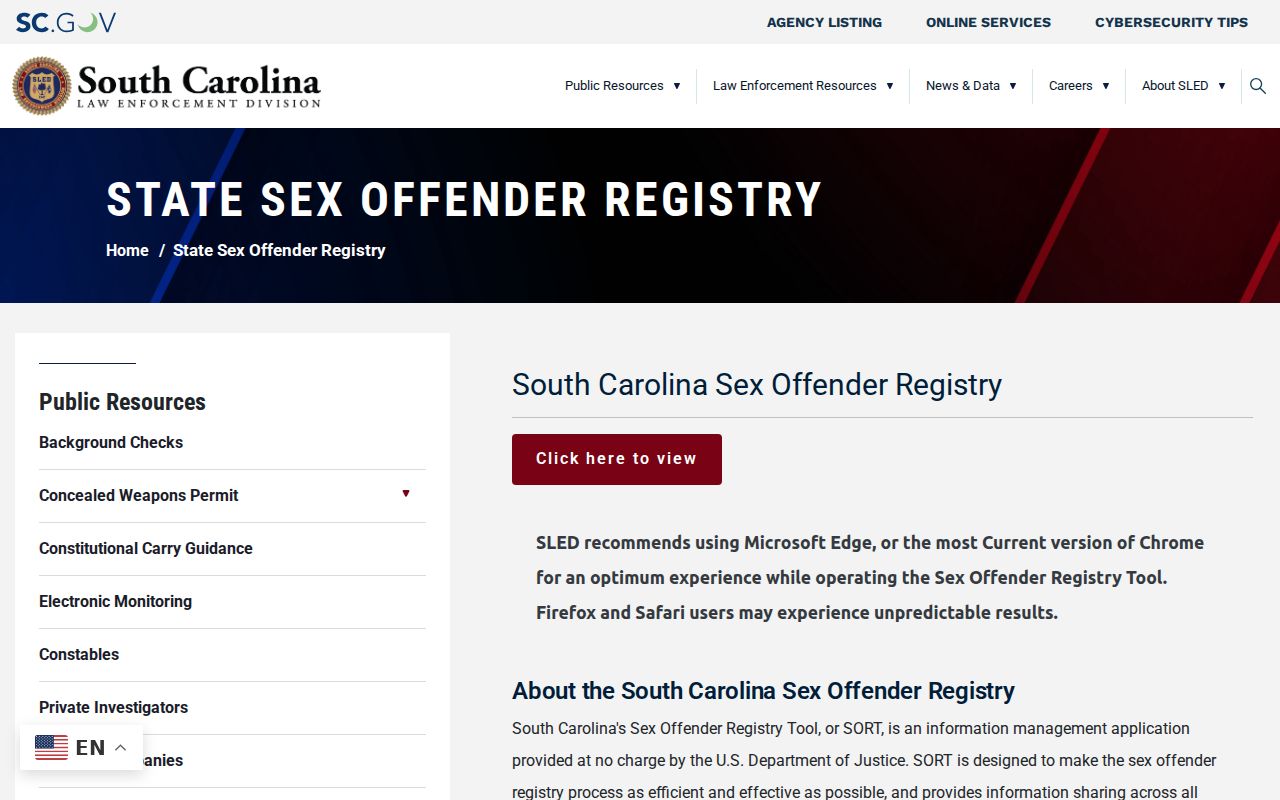
This official page is the best source when the interface or state rules change.
Charleston County SORT and NSOPW
SORT is the right tool for South Carolina registry data. The National Sex Offender Public Website adds the cross-state layer when a search involves travel, a recent move, or a past address outside South Carolina. NSOPW does not replace SLED as the custodian of a Charleston County registry entry. A disputed South Carolina profile still goes to SLED or the registering sheriff.
Other justice databases answer different questions. The SCDC Inmate Search concerns current state-prison custody, not public registry status.
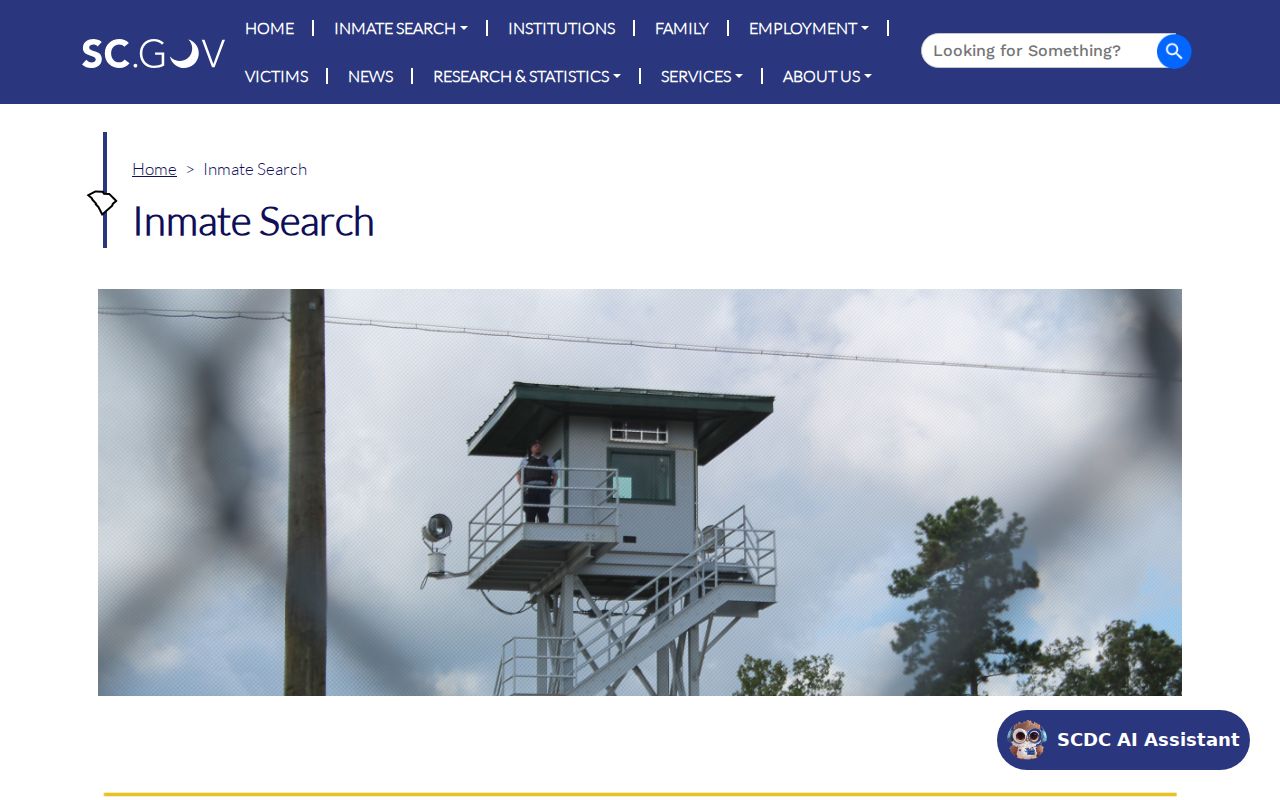
A person may have a registry duty without appearing in the prison locator, so the two results must not be merged.
South Carolina Registration Levels and Requirements
South Carolina now provides tier-specific routes to seek removal after a minimum period. Removal is not automatic. Registration continues while an application or court motion is pending, and the period is measured under the applicable registration, discharge, and supervision rules. The public research supports the earliest route and waiting period below, but it does not support a single verification frequency for every person. The offense, order, and current law control the actual duty.
| Tier | Earliest Current Removal Route | Authority |
|---|---|---|
| Tier I | Administrative application after 15 qualifying years | SLED |
| Tier II | Administrative application after 25 qualifying years | SLED |
| Tier III | General Sessions motion after 30 qualifying years | Circuit Court |
A pending application does not pause registration. A denial normally means waiting at least five years before another administrative application. Tier III has no SLED administrative removal lane, so the matter goes through General Sessions. In Charleston County, General Sessions sits in the South Carolina Circuit Court at the Charleston County Judicial Center. The Charleston County Clerk of Court is the official source for the court file and copies.
Charleston County Registry Removal Packet
The SLED administrative packet is a formal process, not an edit button on a Charleston County sex offender profile. It requires the completed paper form, two recent FD-258 fingerprint sets, a $250 nonrefundable cashier's check or money order, disposition and sentencing papers, and official proof of treatment. SLED targets a decision within 120 days after receiving a complete package. A recent failure-to-register event or later qualifying offense can affect eligibility.
South Carolina's current tier routes grew out of legal and legislative changes after Powell v. Keel, with later changes refining the process in 2025. There is no internal SLED appeal. Judicial routes go to General Sessions, or Family Court for a juvenile matter. Out-of-state and federal cases use equivalent federal tiers.
For questions, the SLED SOR Unit lists 803-896-2601 and sor@sled.sc.gov. Searchers should not infer that an old conviction or long registration period guarantees removal. Eligibility depends on the full record and current law.
Community Notification and Lawful Use
Registry information supports family safety and community awareness. It should prompt calm steps such as reviewing the official profile, signing up for notifications, checking another state through NSOPW, or asking the proper agency to correct a possible error. It does not authorize surveillance, threats, public confrontation, or punishment. A Charleston County sex offender listing is a public record governed by statute, not permission to harm the registrant or household.
Misuse warning: Using registry information to commit another crime can enhance punishment under S.C. Code §23-3-510. Never harass, threaten, intimidate, or confront a listed person or household.
Suspected noncompliance belongs with the sheriff or SLED. If the issue is inaccurate data, identify the field and contact the same officials. The removal process belongs to the registrant and the named legal channels. Keeping these paths separate protects both public safety and record accuracy.
Charleston County Registry Versus City Reports
Charleston County includes several city police systems, but an incident-report portal is not an alternate sex offender registry. Mount Pleasant's citizen tool creates certain new nonemergency reports. Its records request channel retrieves existing town documents. Neither changes SORT or supplies a substitute registry profile. A suspected registry violation may involve local police, yet the public listing remains a SLED record.
The Mount Pleasant report portal shows how a city intake service differs from a Charleston County registry search.
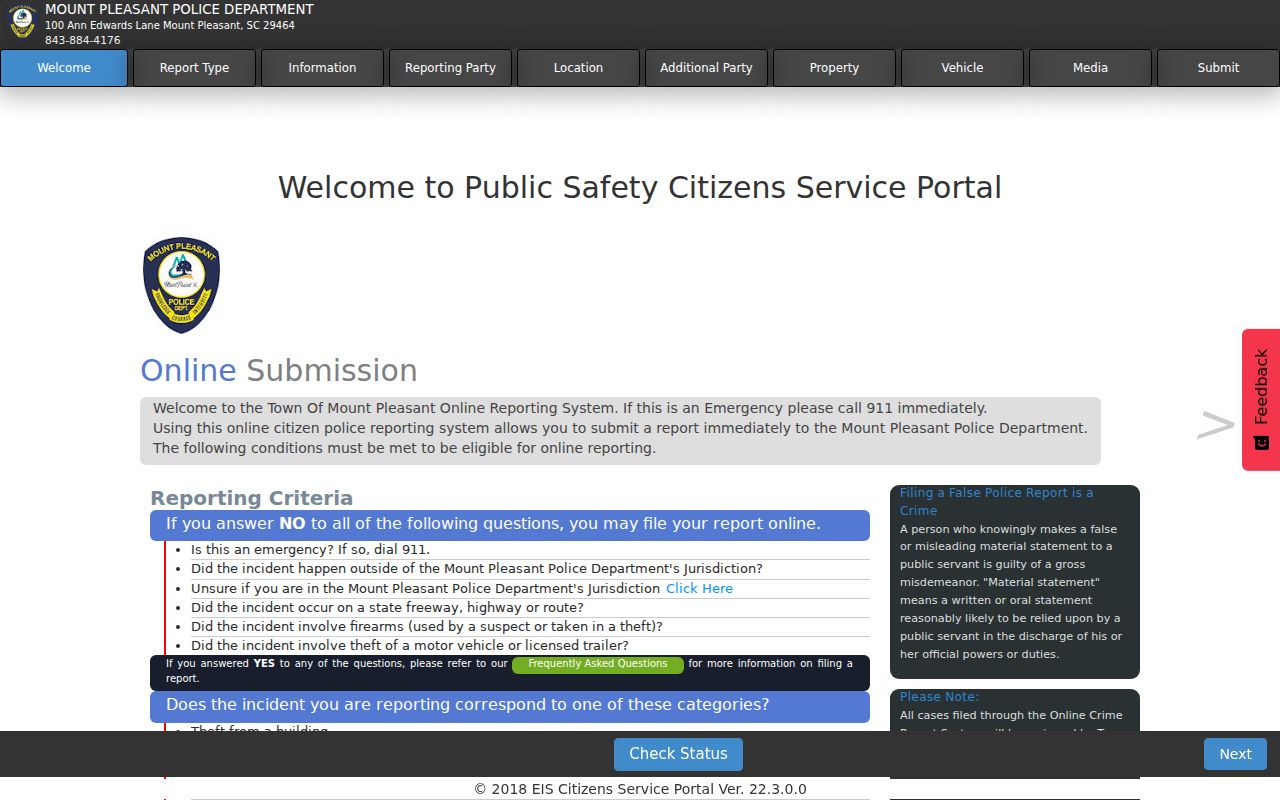
This screen creates an eligible report for police review; it does not find registry profiles or retrieve old police files.
Correcting Charleston County Registry Data
When a Charleston County sex offender profile appears wrong, record the exact item, note the date of the search, and contact SLED SOR or the registering sheriff. The Charleston County Sheriff’s Office is the local law enforcement starting point, while SLED controls the statewide public registry. Do not ask the listed person to explain it. The official custodian can compare the public display with registration and conviction documents. For possible noncompliance, use the same government path and avoid personal investigation.
If the dispute concerns the conviction or disposition behind a registration entry, preserve the case number and compare the Charleston County Public Index with a clerk-certified copy. A jail booking profile or city police report is not the controlling judgment.
Local police records have their own request lanes. The Mount Pleasant documents and information request page is one example of a city custodian's process.
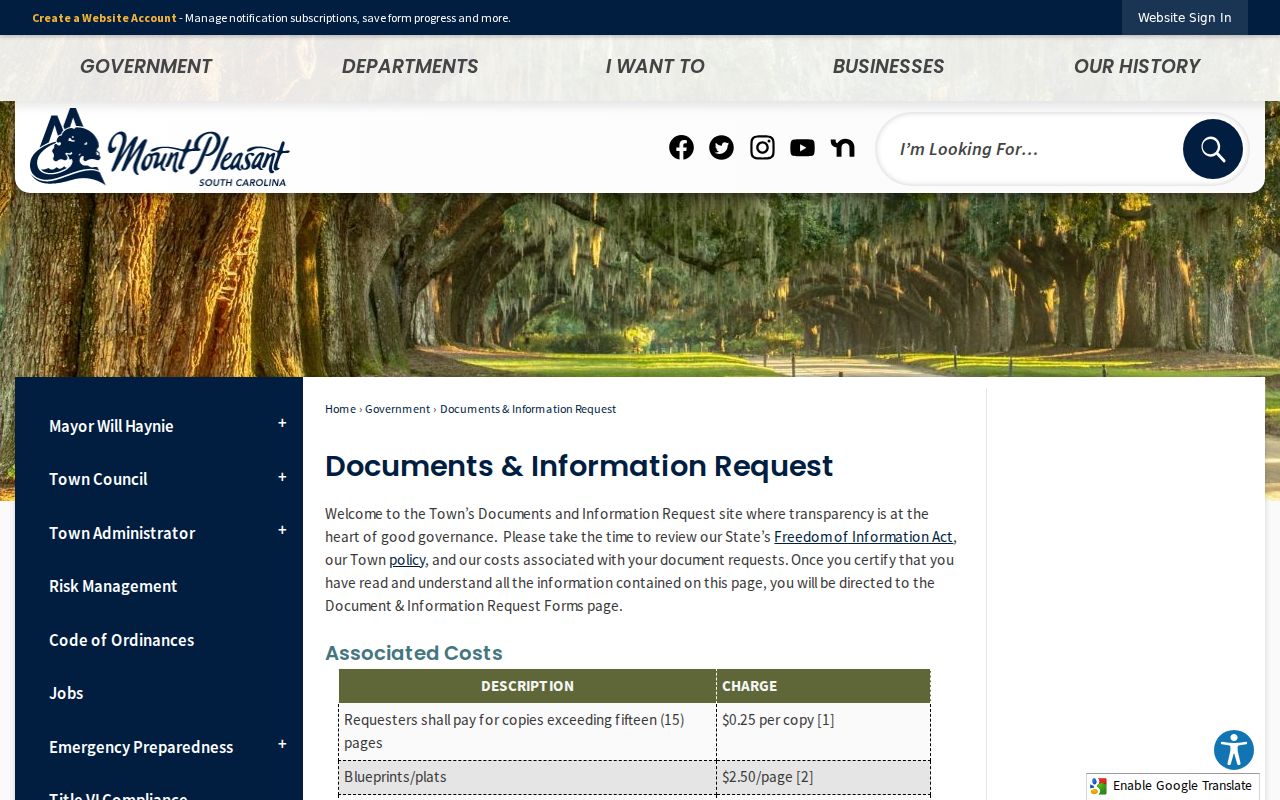
Use that city route for town police documents, while disputed registry fields remain with SLED and registration officials.