
Checking Criminal History in Charleston County
No one Charleston County criminal records system is complete. Begin with the record that best fits the question. Court status belongs in the Charleston Public Index. Present or prior county custody belongs in the Sheriff Al Cannon Detention Center search. A statewide name-based history comes from SLED CATCH. Police narratives remain with the agency that wrote them. The Ninth Circuit Trial Docket adds scheduling context, but it is a courtesy calendar rather than the final judgment.
Gather the full legal name, date of birth, spelling variants, approximate dates, and any case, indictment, booking, inmate, warrant, or agency report number. Those details separate people with similar names and help an offline clerk retrieve older Charleston County criminal records.
- Search the Charleston Public Index for filed court activity and read the status and disposition fields separately.
- Check the county inmate portal, including “Show Past Bookings,” when the question concerns custody or a past intake.
- Review the arresting agency named on a booking profile, then request its incident or arrest report.
- Order SLED CATCH when a South Carolina repository report is needed, while keeping its name-match and reporting limits in mind.
- Ask the Clerk for a certified copy when a printed online result is not enough.
Note: A zero result means only that the named system found no match under those inputs at that time.
Charleston Records Span Four Systems
A booking profile, court file, CATCH report, and SCDC locator record describe different events. The county roster focuses on intake, bond, housing, and release. A court file tracks filed charges, hearings, disposition, judgment, and sentence. CATCH shows qualifying South Carolina arrest cycles and reported outcomes. SCDC covers current state-prison custody, not county detention or probation. A record can appear in one and not another without either source being false.
| Question | First Charleston County channel | Best fallback |
|---|---|---|
| Was a case filed? | Public Index | Clerk or city court |
| Was there county custody? | SACDC inmate search | Jail phone or FOIA |
| What did South Carolina receive? | SLED CATCH | Court and arresting agency |
| Is the person in state prison? | SCDC Inmate Search | SACDC, VINE, or SCDPPPS |
The official SLED CATCH entry screen shows the terms and route for the statewide name check.
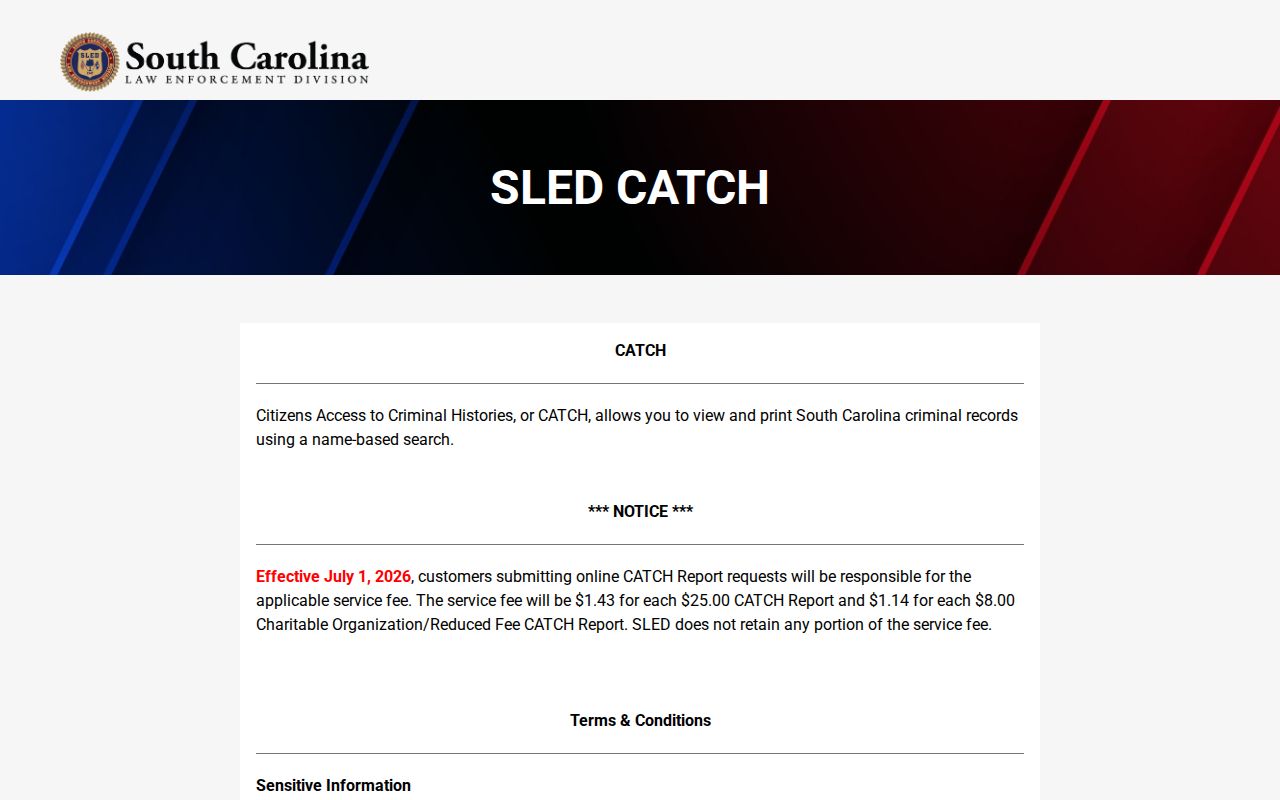
This interface is the state layer; it does not replace Charleston County court, warrant, jail, or registry checks.
South Carolina Official Background Checks
South Carolina Law Enforcement Division Criminal Justice Information Services is the central repository. Its CATCH product lets any member of the public order a name-based South Carolina report. The search uses a starts-with match on last name, first name, and date of birth; an SSN is checked if supplied. Aliases, different birth data, or missing fingerprints can cause a false negative or a “Special Processing Required” result. CATCH is not national, does not list wanted-person information, and does not search the sex offender registry.
A person seeking a subject-only national file can use the FBI Identity History Summary. Statutory fingerprint work follows SLED or the requesting agency’s instructions, with prints available through IdentoGO or local law enforcement. The detention center also takes public fingerprint cards. These official channels serve self-review and legally required processes; the search widget is not an official screening service.
Charleston County Record Check Fees
Cost depends on scope. The broad public state report costs more than the county-only self-check, and fingerprint capture is a separate service. Online CATCH processing fees changed on July 1, 2026, so the total differs from the mail route. Confirm a current charge before sending payment.
| Product | Coverage | Published fee |
|---|---|---|
| CATCH online | South Carolina repository | $25 plus $1.43 service fee |
| Reduced CATCH online | Qualifying statutory category | $8 plus $1.14 service fee |
| CATCH by mail | South Carolina repository | $25 |
| CCSO local check | Subject-only, CCSO jurisdiction, up to 20 years | $5 |
| SACDC fingerprinting | Print taking only | $5 exact change |
Charleston County’s local form has a five-working-day turnaround and unclaimed results are destroyed after ten days. It is not a statewide rap sheet.
Criminal Record Types
The source defines the record. A police incident report can exist without an arrest. An arrest report explains the agency’s action, while a booking entry documents intake at the jail. The court file begins with legal process and follows the case to an outcome. SLED’s repository compiles qualifying submissions rather than the full underlying report or docket.
- Incident and arrest reports: held by CCSO or the city or state agency that wrote them.
- Booking records: held by the Sheriff Al Cannon Detention Center for current and prior county intakes.
- Court files: held by General Sessions, magistrate, or municipal court according to jurisdiction.
- Warrants: controlled by the issuing court and served or verified through the proper warrant office.
- Supervision and prison records: divided between SCDPPPS and SCDC.
The Ninth Circuit Solicitor maintains prosecution programs and case information that can add context.
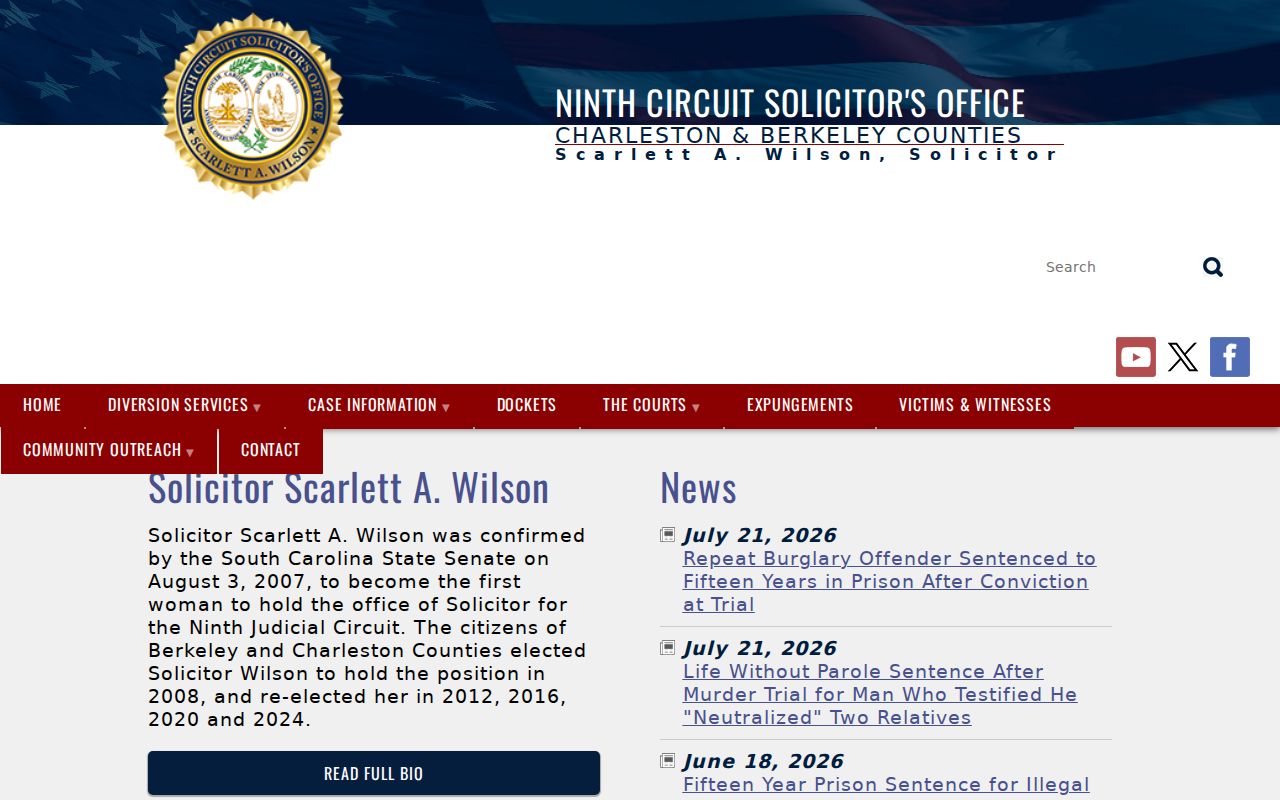
Solicitor notes and recommendations are not substitutes for the court’s entered judgment.
Charleston County Drug Court shows why the final court record matters. The program brings the judge, Solicitor, Public Defender, treatment staff, probation, and court staff into one process. Successful completion can lead to dismissal, while noncompliance or a new charge can end participation. A program note alone does not prove the outcome. The Public Index and Clerk remain the sources for the disposition that was actually entered.
Charleston County Jail Records
The Sheriff Al Cannon Detention Center is Charleston County’s booking hub. Its public search accepts first and last name, arrest or booking date ranges, and an inmate number. “Enable Sounds Like” helps with spelling variants. “Show Past Bookings” expands the result beyond people now held. A profile can show inmate and booking numbers, intake and release times, arresting agency, charges, bond, housing, and court or magistrate information.
Read each field narrowly. Release ends a custody episode, not the prosecution. Bond is not a fine and does not prove guilt. The arresting agency remains the custodian for its own narrative even after the person enters the county jail. For more detail on those distinctions, use the Charleston County arrest lookup.
Charleston County’s modern jail complex grew from a 1966 facility through several expansions. Its published capacity is 1,693, but a live population should always be treated as a dated snapshot.
Inside a Charleston County Criminal Record
Identifiers link records across offices, but the numbers are not interchangeable. A police agency case number names an investigation. A booking number names one intake. A court case or indictment number follows a filed matter. Dates also serve distinct roles: offense, arrest, booking, filing, disposition, and release may all differ.
| Name and identifiers | Legal name, aliases, birth data, and system-specific case, booking, inmate, or indictment numbers. |
|---|---|
| Arrest and booking | Arresting agency, intake and release times, alleged charges, bond, and custody fields. |
| Court activity | Filed charge, attorneys, judge, hearings, status, documents, and financial entries when available. |
| Disposition | The recorded outcome for a charge, which may be conviction, acquittal, dismissal, or nolle prosequi. |
| Sentence | The court-ordered result following a conviction, separate from pretrial bond. |
| Supervision | Probation, parole, community supervision, or prison status held by the responsible state agency. |
- Nolle prosequi
- The Solicitor formally stops prosecution of a charge; expungement is a separate step.
- Disposition
- The outcome entered for a charge or case.
- Indictment
- A grand jury’s formal charging instrument, not a finding of guilt.
- Certified copy
- A clerk-authenticated version used when an official record is required.
Charleston County Warrant Verification
CCSO does not publish a dependable active-warrant list. Status changes during the day, and an old web reference cannot supply probable cause. Verify with the Warrants Unit at 843-529-7391, in person through Records at 3505 Pinehaven Drive, or after hours through 843-743-7200. Municipal warrants also require a check with the issuing city court. A missed magistrate date should first go back to that court.
The official Charleston County warrant instructions distinguish minor bench-warrant arrangements from serious-warrant surrender.
Current status matters. Call before travel or surrender. Payment alone may not clear a mandatory appearance or recall a warrant across every system.
For a serious warrant, the Sheriff directs people to arrange surrender through Warrants. Sealed, juvenile, and search warrants are not public-list products.
Public Access Laws in South Carolina
The South Carolina Freedom of Information Act gives a route to public records, but it does not make every police detail free, instant, or unredacted. An agency may withhold or redact protected investigative material, victim information, juvenile data, and private identifiers. Body-camera data follows a separate disclosure rule. Charleston County court indexes also stopped displaying home addresses for all cases on January 1, 2026.
Key South Carolina laws:
Title 30, Chapter 4 sets FOIA access, timing, and exemptions.
Sections 23-3-115 and 23-3-430 through 540 govern SLED checks and registry access.
Sections 17-1-40 and 17-1-60 address qualifying record destruction and related publication rules.
Section 23-1-240 treats police body-camera data outside ordinary FOIA access.
Commercial solicitation with public data is restricted. Registry information also may not be used to harass or injure a listed person.
Charleston County Record Custodians
Charleston County criminal records sit across a dispersed campus. General Sessions courtrooms are at 100 Broad Street. The Solicitor and Public Defender are at 101 Meeting Street. CCSO Records is at 3505 Pinehaven Drive, and the jail is at 3841 Leeds Avenue. Sending a request to the wrong building can add delay, especially when the needed item is a city police narrative rather than a county booking file.
Charleston County Clerk
Judicial Center
100 Broad St.
Charleston, SC 29401
843-958-2106
CCSO Records
3505 Pinehaven Dr.
North Charleston, SC 29405
Start with Records before filing formal FOIA.
CCSO Public Information
3691 Leeds Ave.
North Charleston, SC 29405
843-958-2114
Al Cannon Detention Center
3841 Leeds Ave.
North Charleston, SC 29405
843-529-7300
The official Charleston Police FOIA route is the source for city police reports and case-specific records.
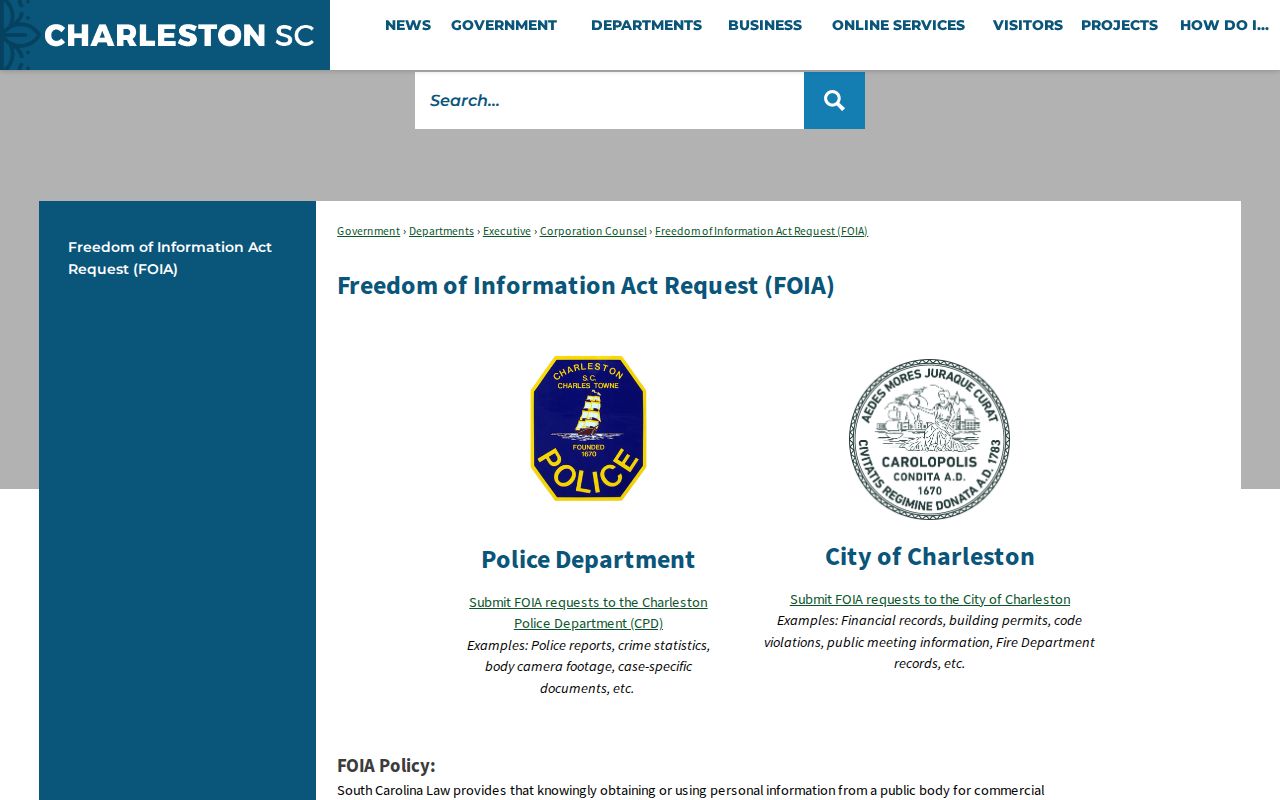
This city channel is distinct from CCSO Records and from Charleston city’s general Records Management office.
Charleston Police also publishes official information reports that give agency context without replacing a case report.
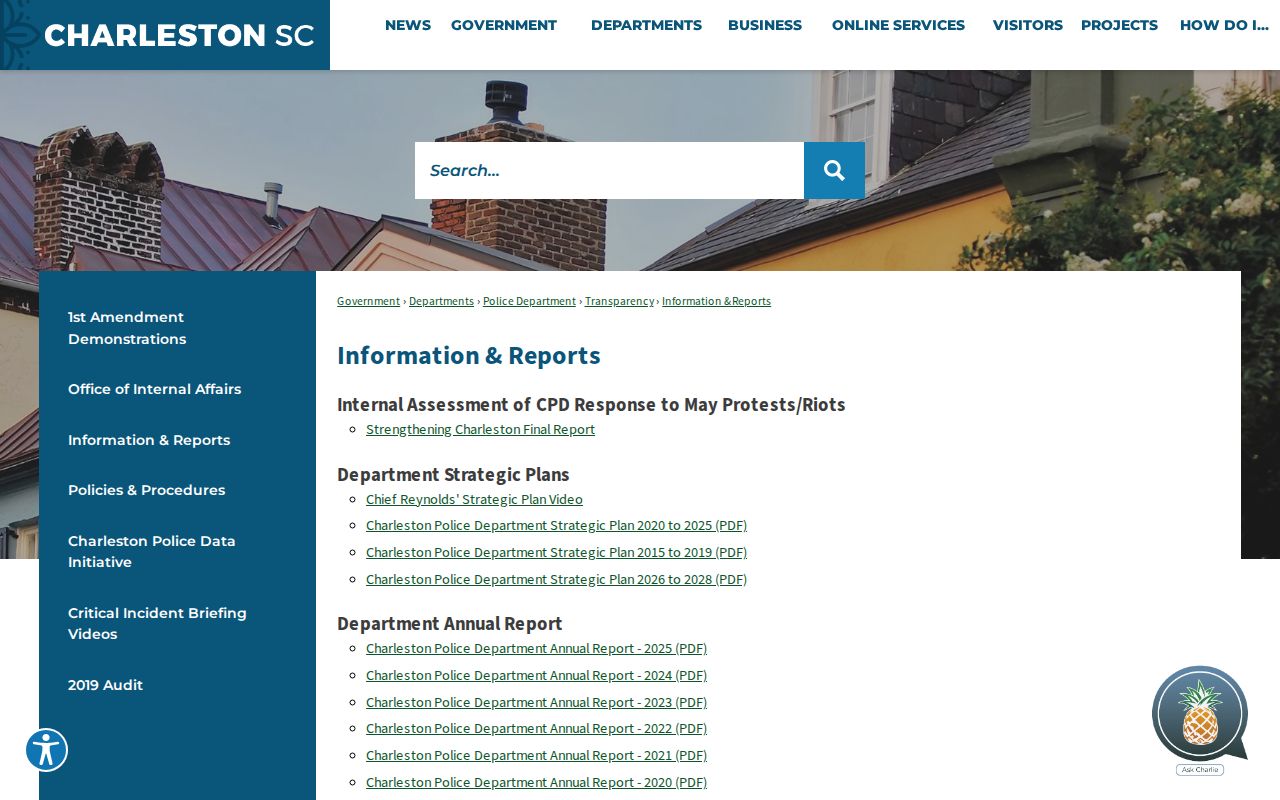
Annual statistics are broad agency snapshots and should never be read as proof about a person or one neighborhood.
Sealed, Expunged, and Restricted Records
Juvenile matters, protected identifiers, victim data, expunged entries, and exempt investigative material do not appear as ordinary public Charleston County criminal records. Expungement depends on the offense and outcome. A qualifying dismissal, nolle prosequi, or not-guilty result can receive no-fee processing under Section 17-1-40, but eligibility should never be assumed.
General Sessions applicants ordinarily work through the Ninth Circuit Solicitor. A qualifying magistrate or municipal dismissal goes to the court that disposed of the charge. SLED cannot start the case or remove a court entry without an Order for Destruction of Arrest Records. The legal order and the database update are separate events.
Charleston County Expungement Follow-Through
After the court issues an order, the affected agencies receive it. SLED advises waiting four weeks after receipt, then buying a new CATCH report. If the entry remains, send SLED a certified true copy of the order, a CATCH report bought within thirty days, and a stamped return envelope. A separate booking or private database may require its own dispute with the office that controls it.
Correction and expungement solve different problems. A wrong case number or mismatched identity should be corrected by the custodian. An accurate but legally eligible record needs the statutory destruction process. Keep the case, booking, and agency identifiers so each office can trace the right entry.
Charleston County Supervision Records
Probation and parole are state-run through the South Carolina Department of Probation, Parole and Pardon Services. The Charleston County office is at 1357 Remount Road, Suite 7, North Charleston, and its phone is 843-740-1553. SCDC’s inmate locator expressly excludes probation, parole, and community-supervision cases, so a prison-search miss does not answer a supervision question.
The Charleston County SCDPPPS office page publishes local office and caseload context.
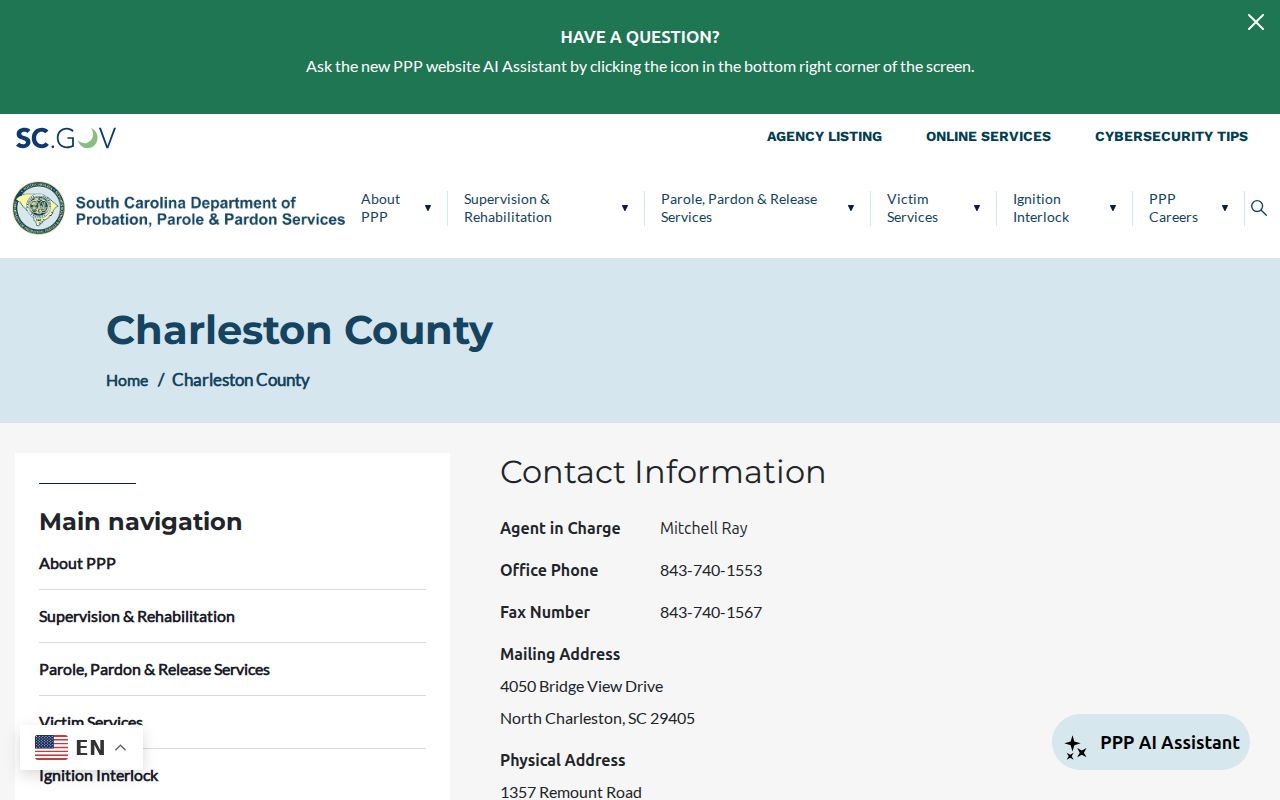
Its totals describe the supervision system, not a public person-by-person probation lookup.
Federal criminal records form another distinct layer. The federal Charleston courthouse page identifies the local U.S. District Court facilities.
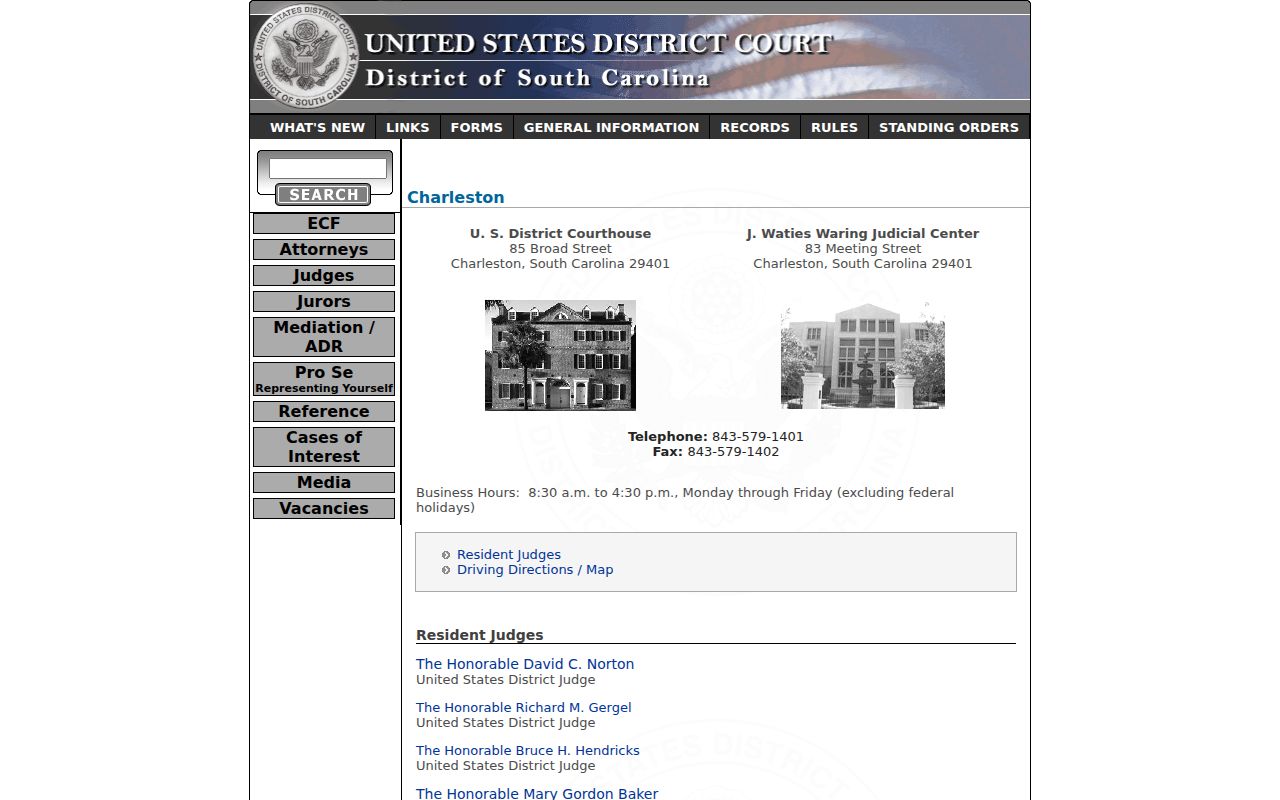
PACER supplies federal docket entries, while the federal Bureau of Prisons locator covers federal custody rather than Charleston County jail or South Carolina prison records.
Charleston County Criminal Records by City
The three largest incorporated places use their own police and municipal-court channels. City reports do not merge into a single Charleston County police archive, even when an arrestee is booked at the county jail. Census July 1, 2025 whole-place estimates rank Charleston first, North Charleston second, and Mount Pleasant third; Charleston and North Charleston cross county lines, so verify which county and agency handled the event.
Charleston Criminal Records
159,423 · CPD reports and Charleston Municipal Court
North Charleston Criminal Records
129,245 · Police FOIA and identifier-based eCourt
Mount Pleasant Criminal Records
95,469 · Town records and Municipal Court
The North Charleston Police Department presents the agency channel for city report questions.
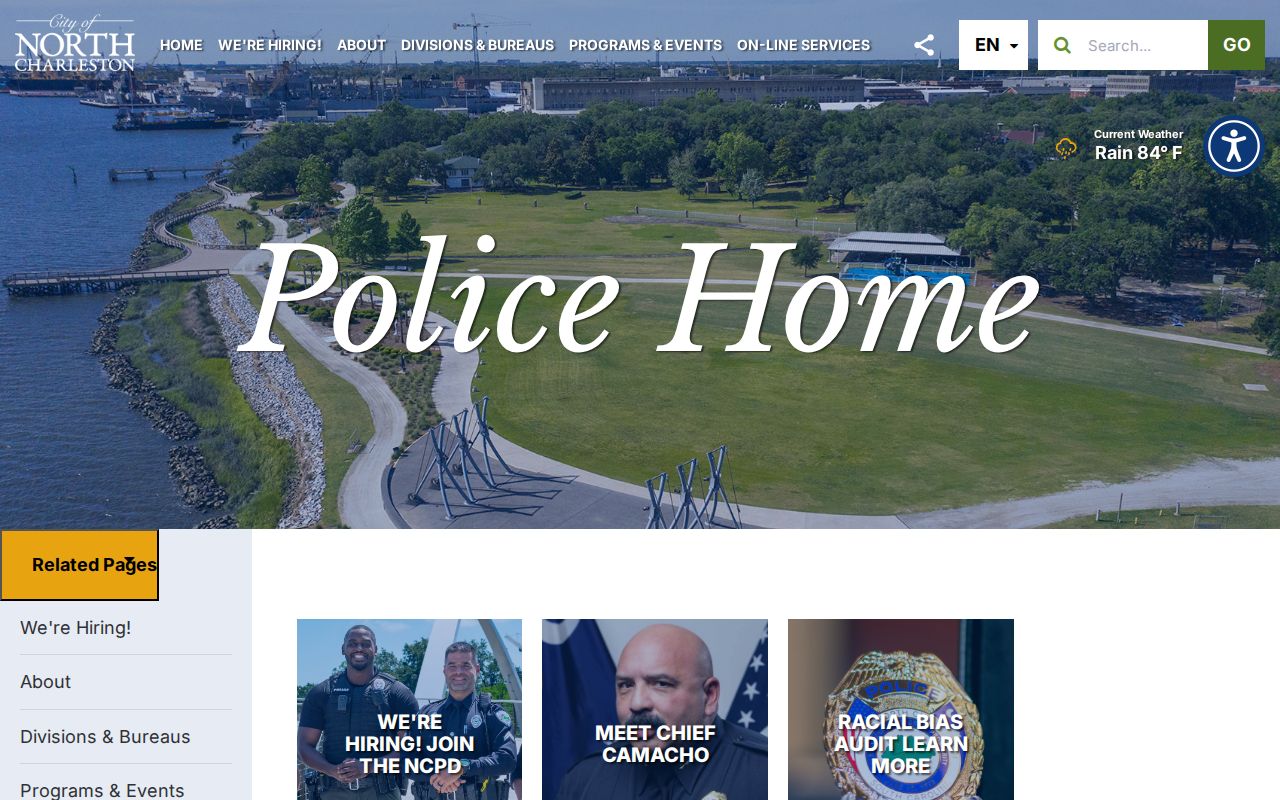
Its FOIA workflow must be used as a managed request, not mistaken for an instant name search.
The Mount Pleasant Police Department operates from the town’s Municipal Complex.
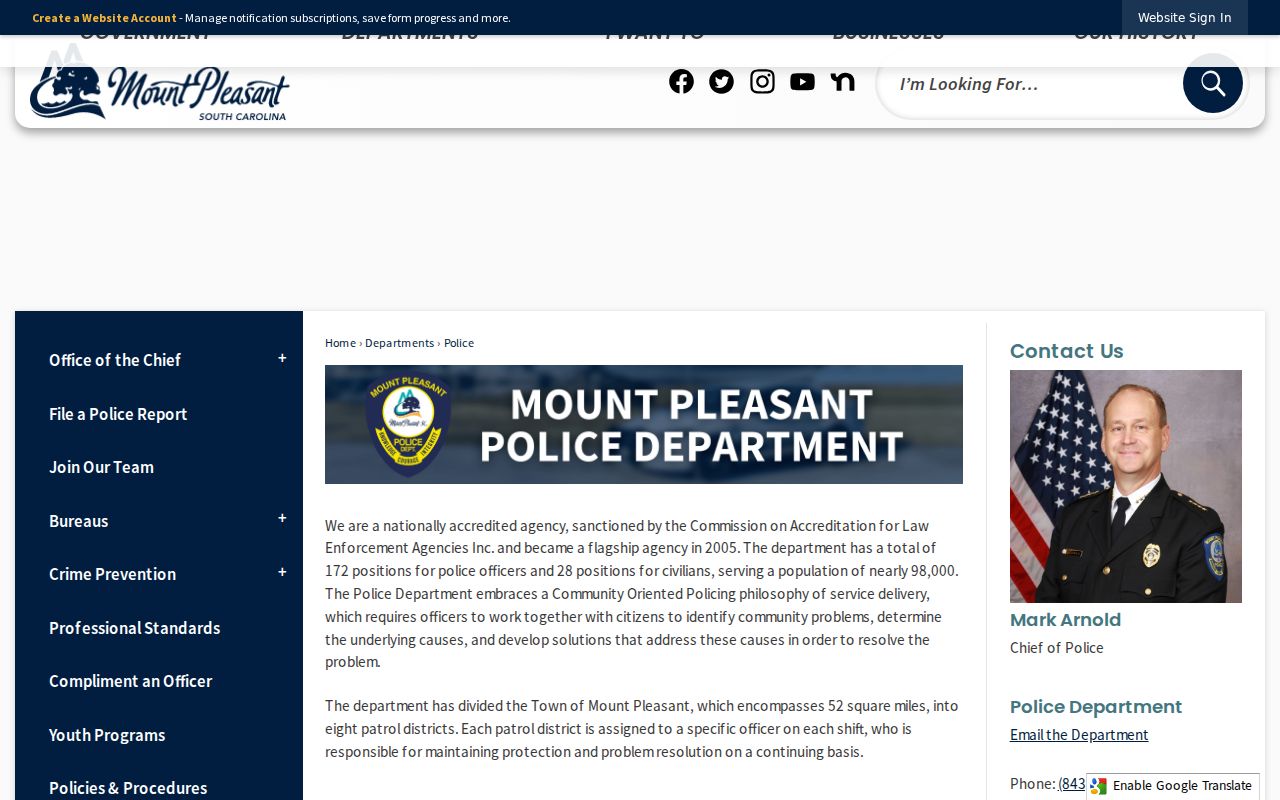
Its citizen portal creates certain new nonemergency reports; retrieval runs through Records or Town FOIA.
Charleston’s Municipal Court page gives the city court schedule and contact route.
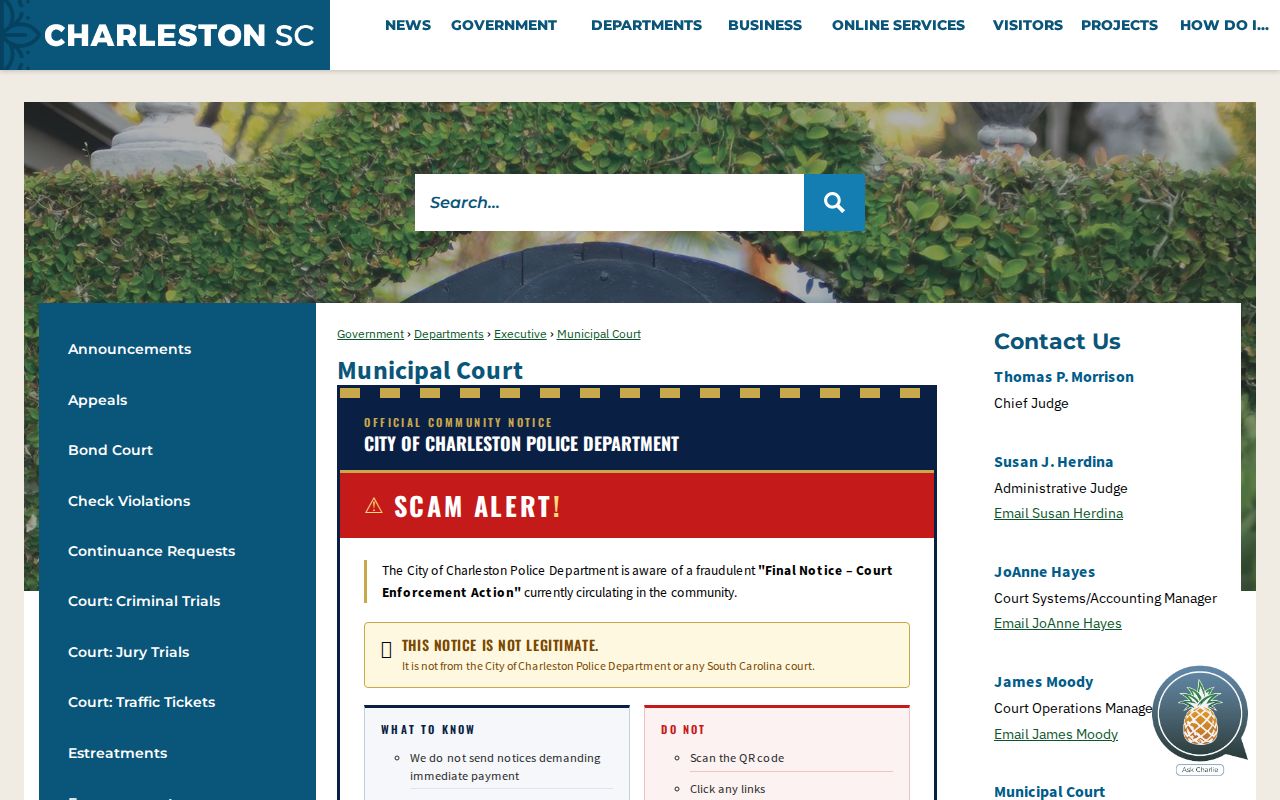
The calendar is not a general name-search database, so city case questions may require a phone or counter request.